
The term sheet a dealer settles with a Chinese generator brand before the first order: territory, price tiers, MOQ, documents, warranty, parts, payment and exit.
In this guide9 sections
A price list and a minimum order quantity are the start of a dealer relationship, not its terms. Before you place a first order with a Chinese generator brand, settle a term sheet that names the contracting party, the territory and channels you may sell in, the price tiers and the rule for changing them, the first-order mix and reorder conditions, lead times and stock support, the documents and labels for your market, how warranty and spare parts will work, what sales material you receive, how you pay and under which delivery rule, and what happens to unsold stock, price drops and the relationship's end. The exception is a trial order of a few units placed to test the brand: there you can accept the brand's standard terms, but record the same fields anyway, because the terms you do not negotiate on the trial become the precedent for the container.
People who search for how to become a generator dealer mostly find brand recruitment pages written from the brand's side. This guide is written from the dealer's side, for shops, regional distributors and online or marketplace sellers in Russia and the CIS, Latin America, Africa, the Middle East and Europe who have received a catalogue and want to know what to settle before money moves. It is not legal advice: where a term depends on the law of your country, it says so and tells you who to ask.
Decide what kind of dealer relationship is on the table
Four arrangements hide behind the word "dealer", and the terms differ for each. Resale of the brand's models under the brand's name; online or marketplace sales under the brand's name; private-label supply under your own brand, which is the subject of the OEM and private-label guide and BEAR's own OEM and ODM page; and a mix where you resell some models and brand others. Decide which one you are discussing before you discuss a discount, because exclusivity, marketing material and warranty routing mean different things in each.
Then identify three parties, who may or may not be the same company: the seller of record who signs the contract and receives payment, the manufacturer whose name goes on the plate, and the party who answers for warranty claims. A dealer who signs with a trading company, sells a factory's brand and routes claims to a third address has three relationships, and each needs its own name in the term sheet. The supplier checklist covers how to verify those identities before you rely on them.
Put territory and channel rights in writing
"You will be our dealer for your country" is a sentence, not a right. Write down the countries or regions covered, the channels you may use, the accounts or marketplaces that are reserved for the brand or for another dealer, and whether the arrangement is exclusive. If it is, define what exclusivity covers, how long it lasts, what you must do to keep it, and what happens when the brand's own online store or another importer sells into your area.
Ask the brand one direct question and keep the written answer: is the same territory or channel offered to anyone else today? Then have a lawyer in your own country read the exclusivity and termination wording before you sign, because the enforceability of such clauses is a matter of local law and this page cannot settle it for you.
Make the price offer comparable
A discount headline is not a price. Ask for a dated price list by model, in a named currency, with a validity period, the volume basis for each tier, and a statement of what is included and excluded: packaging, accessories, documents, test records, factory inspection. Then ask how prices change: with what notice, from which date, and what happens to orders already confirmed and deposits already paid.
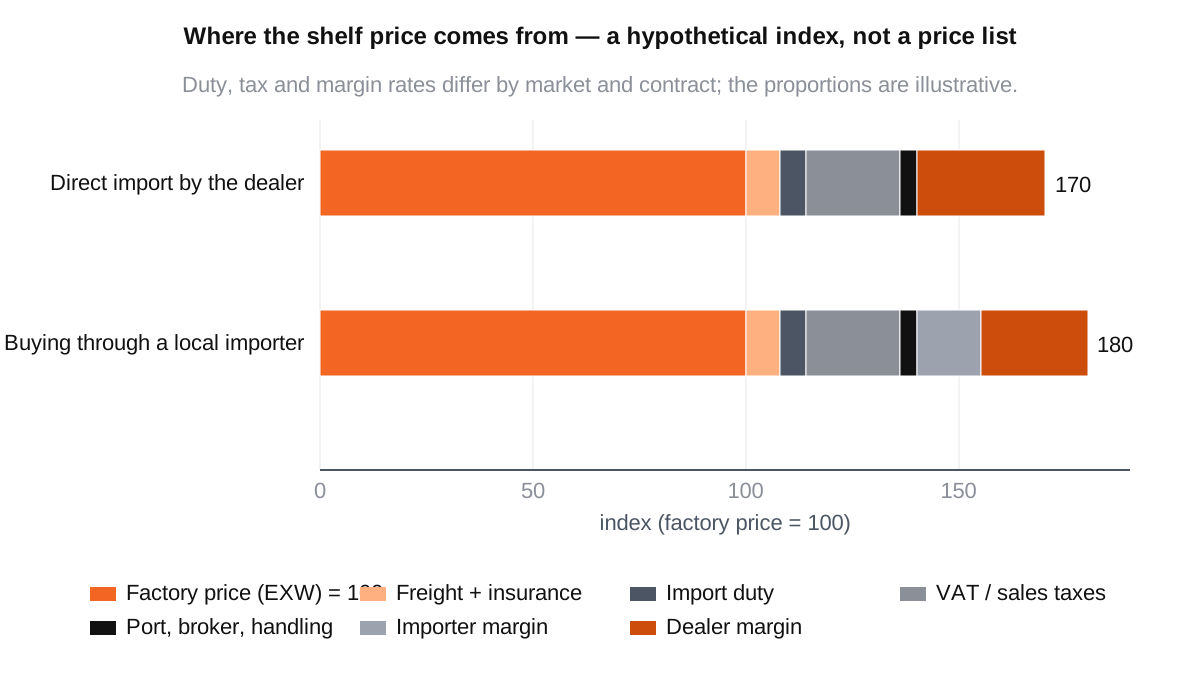
The chart is there to make one point: the factory price is the part of your shelf price you negotiate hardest and understand least. Freight, duty, taxes and handling are set by your route and your market; the brand controls the price, the validity and the change rule, and those three are the fields to compare between brands. The MOQ and quotation guide shows how to request a quotation whose scope lines up with another brand's.
Set the first order and the replenishment plan
A minimum order quantity needs a basis before it means anything: per order, per model, per variant or per shipment, and whether mixed models count toward it. Ask, then propose your first-order mix by model and quantity and let the brand say which rule applies. A trial order of five or ten units, or a seasonal plan of fifty or more, is a negotiating input, not an entitlement in either direction; the brand may accept, decline or price it, and the term sheet records what was agreed.
Lead time is the second field that needs a basis. Write down the event that starts the clock, deposit received or order confirmed, the stated production or dispatch time, how stock is allocated when several dealers order the same model, and how you are told about delays. "Ready stock" is only a fact when it comes with a model, a quantity and a date. The distributor SKU matrix guide covers how to control the range so that your reorders stay comparable across seasons.
Check that the products can be placed on your market
Before the deposit, list the exact models and the destination market and ask for the conformity documents that apply to each: declarations or certificates, their issuer, scope, validity and the name of the document holder. A mark or certificate issued for another model or another market is not evidence for yours, and a dealer who places non-compliant goods on the market usually carries the liability locally. The import compliance guide explains what each market typically expects and the nameplate and resale labelling guide covers what must be on the unit.
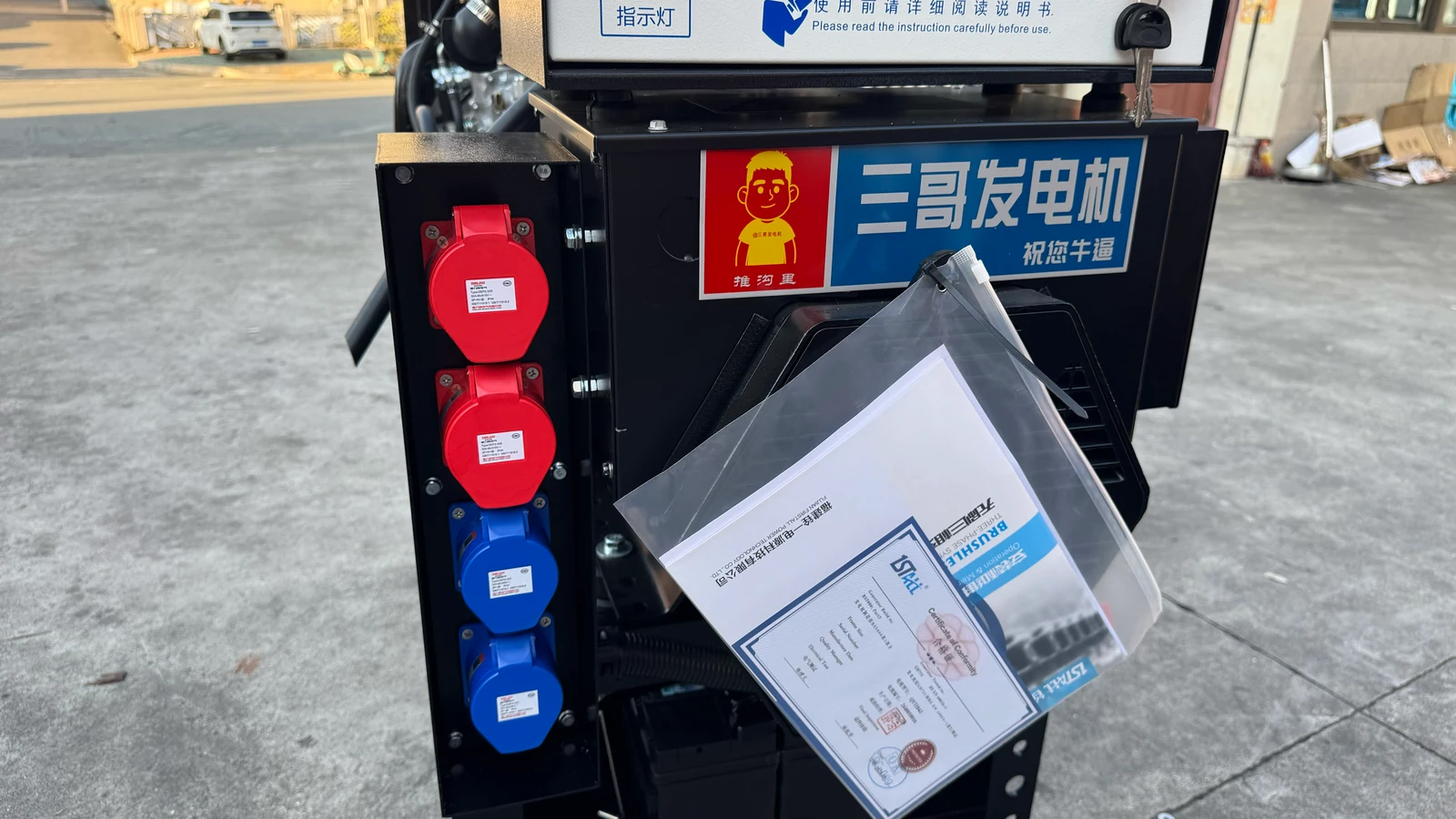
Labels and manuals in your language are deliverables with an owner and a date, not a promise to "translate later". Ask for the proposed label artwork and manual files, in which languages, with which model identifiers, who approves the final version and when they are ready relative to production.
For the European Union, the Your Europe page on CE marking explains that the mark follows applicable product rules and a declaration rather than being a general certificate; Great Britain's government guidance on UKCA and CE marking describes a product-sector regime; and the Eurasian Economic Commission's technical regulation pages frame EAEU conformity by technical regulation. None of them replaces the local authority or adviser who confirms what applies to your model. The documents-before-order guide lists the full pack.
Agree how warranty, parts and sales materials will work
A warranty is a process, not a sentence. Write down who accepts a claim from your customer, what evidence the claim needs, who decides the remedy, how parts and labour are paid for and how long each step takes. The full set of warranty fields is its own subject; for the dealer term sheet, the three that cannot wait are the claim contact, the evidence list and the parts route.
Spare parts deserve a named list. Ask for the parts catalogue for the models you will stock, the ordering route and lead time for parts, the price basis, how superseded parts are handled, and how long after a model is discontinued parts remain available. The first-order spare-parts kit guide turns that list into a first stock order. Sales materials complete the section: which images, data sheets, manuals and listing texts you will receive, in which formats and languages, with what usage rights and by when; marketplace sellers in particular should refuse listing content whose claims they cannot trace to a model document.
Settle payment, delivery, returns and exit before the first order
Payment and delivery belong in the quotation and the contract, written as fields: deposit and balance with their timing, currency, the beneficiary account, and the delivery rule as a named Incoterms® 2020 rule with its place. The International Chamber of Commerce's rules allocate carriage, risk and cost for the shipment; they do not settle payment terms, product compliance, title or warranty, so each of those needs its own clause.
The remaining terms are the ones dealers most often leave to goodwill and most often regret:
- Price protection. Whether a price drop applies to confirmed orders, to stock on hand or only to future orders.
- Returns. Which goods, in what condition, with what authorisation, who pays freight and whether credit or refund follows.
- Consignment. A specific proposal about stock ownership, payment timing and unsold goods, which the brand may accept, refuse or price; a requested discount of a given size is likewise a proposal, not a market norm or an entitlement.
- Performance and exit. Any volume targets with their measurement period, how often the arrangement is reviewed, the notice for termination, and what happens to open orders, claims and stock when it ends.
Each of these is a row in the sheet below, and an empty row is a decision to carry the risk yourself.
Make the go/no-go decision on the term sheet
Mark every row agreed, evidence received, checked or open, and name the person responsible on your side. Proceed when no material row is open and no key promise exists only in a chat message. Pause when a promise is verbal, when documents contradict each other, or when an answer is postponed until after payment.
| # | Term | Complete answer looks like | Evidence to hold | Status |
|---|---|---|---|---|
| 1 | Contracting parties and product scope | Legal seller, legal buyer, every covered model and variant | Quotation and draft agreement | |
| 2 | Territory and channels | Countries, channels, reserved accounts and marketplaces | Signed schedule | |
| 3 | Exclusivity | Exclusive or not; duration; conditions; remedy for overlap | Contract clause; lawyer's review | |
| 4 | Price tiers and validity | Dated model-level prices, currency, inclusions, tier basis | Price list and quotation | |
| 5 | Price changes and protection | Notice, effective date, treatment of confirmed orders and stock | Contract clause | |
| 6 | MOQ and first-order mix | Basis of the MOQ; agreed first order by SKU and quantity | Order schedule | |
| 7 | Reorder tiers | Thresholds, period, model scope, calculation | Price schedule | |
| 8 | Lead time and stock support | Start event, stated time, allocation, delay notice | Order confirmation or supply clause | |
| 9 | Market documents | Model-specific declarations or certificates, issuer, scope, holder; applicability confirmed locally | Document pack; adviser's note | |
| 10 | Labels and manuals | Files, languages, identifiers, approval owner, date | Artwork and manual files | |
| 11 | Warranty handling | Claim contact, evidence, decision route, remedy, costs, timing | Warranty text and claim procedure | |
| 12 | Spare parts | Catalogue, ordering route, lead time, price basis, support period | Parts list and written policy | |
| 13 | Sales materials | Assets, formats, languages, rights, delivery date | Asset inventory | |
| 14 | Payment and delivery | Deposit, balance, currency, beneficiary, Incoterms® rule and place | Pro forma invoice and contract | |
| 15 | Inspection and acceptance | Scope, timing, records, non-conformity handling, cost | Inspection agreement | |
| 16 | Returns, cancellation, unsold stock | Process, condition, cost allocation, credit or refund | Contract clause | |
| 17 | Performance and exit | Targets, review, notice, stock and claims at termination | Signed contract |
Shortlisting the brands to send this sheet to is a separate step; the manufacturer shortlist names assemblers by segment, and inclusion on a list is not evidence that a brand's dealer terms suit your business.
BEAR sells its gasoline and diesel ranges through dealers and distributors in several markets and against written quotations; the quotation is the document that fixes model, configuration, accessories and papers, and the term sheet above is the document that fixes the relationship around it. Send Miya the sheet with your territory, channels and first-order mix, and the reply will address the rows in the same order rather than with a discount headline.
Frequently asked questions
Is consignment with a 25 to 30 percent discount a normal dealer term?
It is a proposal, not a norm. Consignment changes who owns the stock, when payment is due and who carries unsold goods; a discount of a given size is a separate commercial request. A brand may accept, refuse or price either one, and the term sheet records the outcome.
Does exclusivity mean nobody else will sell the brand in my country?
Only if the clause says so, for a defined area, channel and period, with carve-outs for the brand's own online sales and existing accounts, and with a written consequence for breach. Have a lawyer in your country review the wording; a verbal promise of exclusivity protects nothing.
Is a CE, UKCA or EAC mark on the brochure enough for my market?
No. Each mark follows rules for a product scope and a market, and a document issued for another model or another market does not cover yours. Ask for the model-specific document and its holder, then confirm applicability with your local authority or compliance adviser.