
Size a generator for spray drone charging from the charger's input data, the chargers running together, phase, altitude and duty, then send a comparable RFQ.
In this guide8 sections
Size a generator for spray drone charging from the charger, not from the drone or the battery. Add up the maximum AC input of the chargers that run at the same time, ask the supplier for a prime or continuous rating, named as such, that covers that sum at your site's altitude and temperature, and match the output to the phase and voltage the charger accepts. A gasoline (petrol) inverter generator often suits one charger and short days; a diesel generator set earns its place when several chargers run for hours. The biggest exception is altitude: a set that carries the chargers at sea level can fall short on a mountain field, and only the engine or genset maker can say by how much.
This guide is for spraying-service operators, drone dealers and equipment distributors who buy the generator that travels with an agricultural spray drone. The same method applies to civil cargo-lift and survey drones that charge from the same kind of charger. Where the set sits on a trailer or truck is a separate planning task, covered in the spray drone trailer setup guide; battery care is outside this guide. Electrical connection work belongs to a qualified electrician under the local code.
Start with the charger, not the battery
The generator never sees the battery. It feeds the charger, an AC-to-DC power supply, and the charger's AC input is the load to size for. Battery capacity and charging time describe the DC side; they do not tell you how many kilowatts the charger draws from its supply.
Copy these lines from the charger's nameplate and manual into a sheet, with the document title and revision beside them:
- charger model and the drone it serves
- input voltage range, number of phases and frequency
- maximum input power, or maximum input current at a stated voltage
- any reduced-power mode, such as a lower output on a lower supply voltage
- any generator requirement the maker states
Drone makers publish these figures for specific chargers. DJI, for example, lists charger input data on the Agras T50 specifications page and states a generator requirement for a named charger in the Agras T50 FAQ. Read the figure for your exact charger and region at the source, because input modes and limits differ between charger generations. A figure published for one charger does not carry over to another charger, and it does not confirm that a particular third-party generator will deliver it at your site.
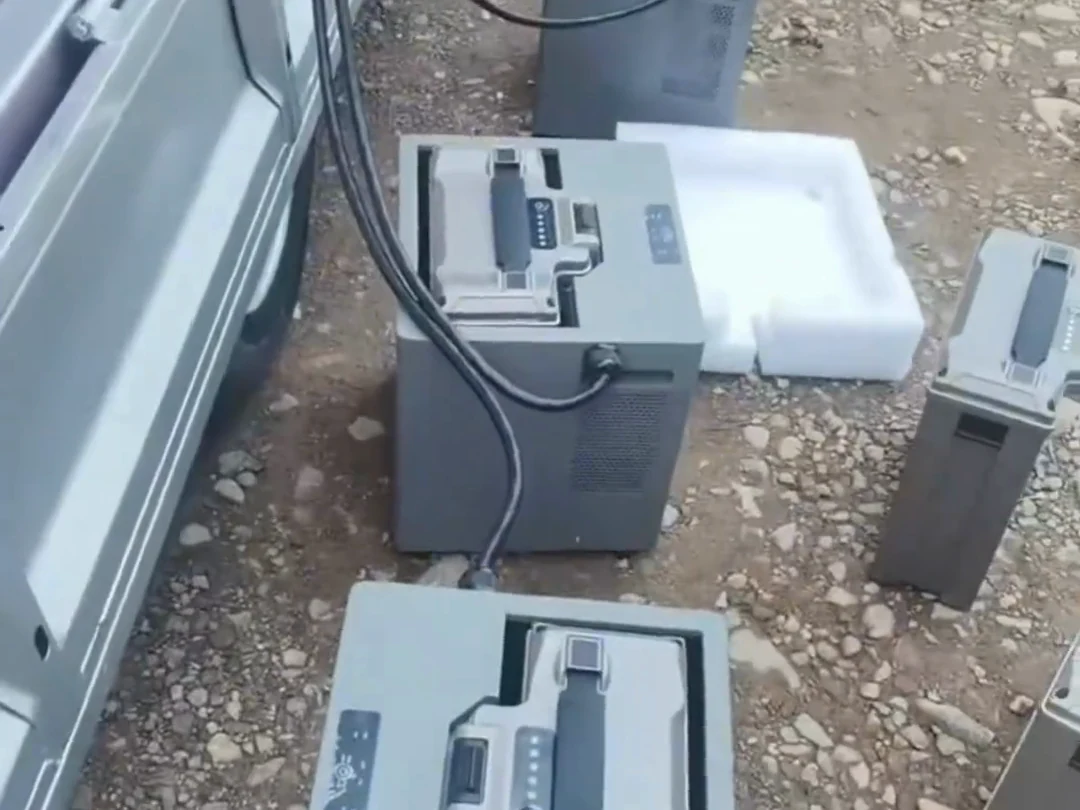
If a figure is missing, or the manual gives only a current, put that question to the charger maker before you size anything. A supplier can work from voltage, phase, frequency and current together; a model name alone gives the supplier nothing to size from. For an export order, the voltage and frequency checklist shows how to fix the destination-market supply on the same sheet.
Count the chargers that run together
Size for the chargers that can draw power at the same moment, not for the number of batteries in the team's rotation. Six batteries cycling through two chargers load the generator like two chargers. Four chargers switched on together load it like four, whatever the number of batteries.
Write the scenario down as the operator plans it: which chargers, how many at once, in which mode. If the plan can change during the season, for instance when a second drone joins the team, record the highest combination you intend to run and size for that. Pumps, mixers, lights or tools that share the same set go on the same sheet as separate lines.
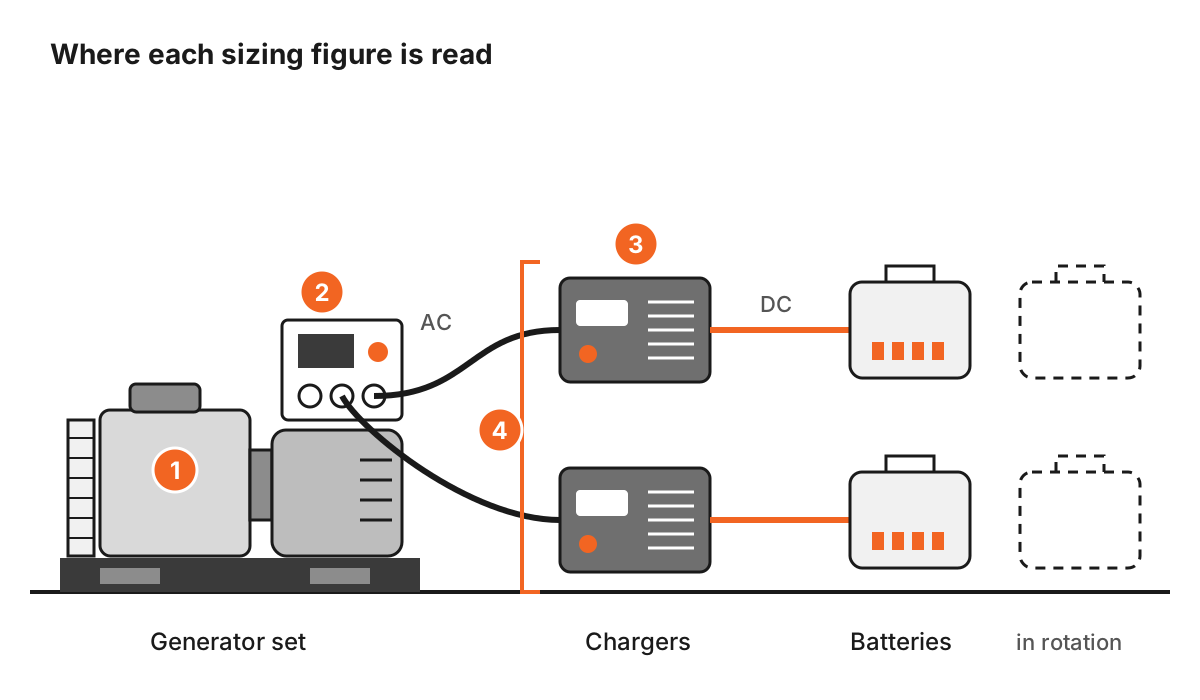
| # | Where the figure is read | Who owns it |
|---|---|---|
| 1 | Generator data sheet: prime or continuous rating with its category, and the rating at site altitude and temperature | Generator supplier |
| 2 | Output: voltage, phase, frequency and socket types | Generator supplier; the electrician for the connection |
| 3 | Charger nameplate and manual: maximum AC input and input modes | Charger or drone maker |
| 4 | Number of chargers that run together | Operator |
Match phase and voltage to the charger input
The charger's accepted input decides the output you ask for. Some chargers take a single-phase supply only, some take three-phase, and some accept both with a different power limit in each mode. A single-phase set cannot deliver a charger's three-phase-mode power, however large its rating looks.
Single-phase chargers on a three-phase set raise a second question: how the chargers are spread across the three phases. Each phase of the alternator carries its own share, and a set loaded on one phase reaches its limit long before the nameplate total. Ask the supplier to state the permitted load per phase and the arrangement the quoted set is built for. The single-phase and three-phase guide explains how the two ratings relate.
Sockets follow from the same decision. List the plug each charger cable carries and ask for a socket schedule against that list, as described in the generator outlets guide. Connection, protection and earthing are the electrician's work under the local code and are not designed in an RFQ.
Size on a prime or continuous rating at your site
A charging day means hours under load, so plan on a rating meant for long running and never on a standby or maximum figure. Two long-running categories exist, and they are not the same number. Prime power generally assumes a varying load and comes with a condition on the average load; continuous power assumes a constant load. Tell the supplier how many hours a day the chargers run and how steadily they draw.
The quotation should then name the rating category, the rule it comes from and the average load that rule allows for your pattern. ISO 8528-1 is the international standard that defines these rating categories, and a maker's own rating rule can add limits of its own. The rating guide shows how to tie a quoted figure to its rating rule.
Altitude and high ambient temperature reduce what an engine can deliver. The reduction depends on the engine, its aspiration and the cooling package, so the factor has to come from the engine or genset maker for your site's altitude and hottest working temperature. The altitude and temperature guide lists what to send and what to ask back. Compare quotations on the rating at your site conditions, never on the catalogue number.
Keep the margin visible as its own line. It is your decision about growth and uncertainty, and a supplier can only check it if it is written down. The sheet below puts the whole calculation on one page: the buyer fills in lines A to F, and each supplier answers line G for the set it offers.
| # | Input | Source | Hypothetical example |
|---|---|---|---|
| A | Maximum AC input of one charger | Charger maker's document | 7.5 kW |
| B | Chargers running together | Operator's plan | 3 |
| C | Simultaneous charger load, A × B | Calculated | 22.5 kW |
| D | Other loads on the same set | Their nameplates | 0 kW |
| E | Margin chosen by the buyer | Buyer's assumption | 15 % |
| F | Load to cover at the site, (C + D) × (1 + E) | Calculated | about 25.9 kW |
| G | Site factor of the offered set at your altitude and temperature | Supplier's written answer, from the engine or genset maker | 0.90 |
| H | Smallest prime or continuous rating that set can have at reference conditions, F ÷ G | Calculated from the supplier's answer | about 28.8 kW |
The last column is a hypothetical example that shows the arithmetic; it is not a recommendation for any charger, margin or site. Lines A to F go into the RFQ with the site altitude and the hottest working temperature. Each supplier returns line G for the set it offers, and line H is then the least that set's rating at reference conditions has to be. A rating category with an average-load condition can call for more than line H, which is why the category is asked for first.
Ratings appear in both kW and kVA. Ask for both, and for the power factor the rating assumes, before you compare two offers. A kVA figure on one quotation and a kW figure on another are not the same measure. For loads other than chargers, the general method is in the generator sizing guide.
Gasoline inverter generator or diesel set: decide by the duty
Neither type is the automatic answer. Some drone makers sell their own gasoline inverter generators: DJI, for example, lists one with a DC charging output for the battery on the Agras T50 specifications page. Size a unit of that kind from its maker's documents: the charger-input method in this guide is for a separate generator that feeds a separate charger.
Among separate sets, the choice between a gasoline inverter generator and a diesel generator set follows the duty, and teams that run several chargers through a long day often move to diesel. The table lists what to compare; it gives criteria, not a verdict.
| Criterion | What differs | What to get in writing |
|---|---|---|
| Daily hours and chargers at once | One charger for part of a day and several chargers for a full shift are different duties | Rating category, and the hours and average load it allows |
| Fuel on the truck | Gasoline or diesel: which fuel the team already carries for vehicles and pumps | Tank volume and stated consumption with its load basis |
| Service between jobs | Oil, fuel-filter and air-filter intervals differ by engine | Service schedule from the manual |
| Weight and handling | Carried by hand, or lifted by forklift or crane and fixed on a vehicle | Wet weight, lifting points and outline drawing |
| Output | Single-phase only, or single- and three-phase to order | Voltage, phase, frequency and socket schedule |
| Noise at the field edge | Depends on the model and on an open-frame or canopy build | A measured figure with distance and load, if noise matters |
The gasoline and diesel comparison and the inverter generator guide go through the general trade-offs between the two types.
Field conditions that change the specification
A set that charges drones works outdoors, moves every day and often stands in dust. Those conditions belong in the RFQ as questions with answers, not as the single word "outdoor".
- Dust. Where the air filter sits, how its condition is checked and how often the manual says to replace it. The maintenance schedule guide shows how to request the interval list.
- Rain. Open frame, roof or full canopy, and what the alternator and control box are protected against, with the supplier's document. The open-frame and enclosed comparison covers the choice.
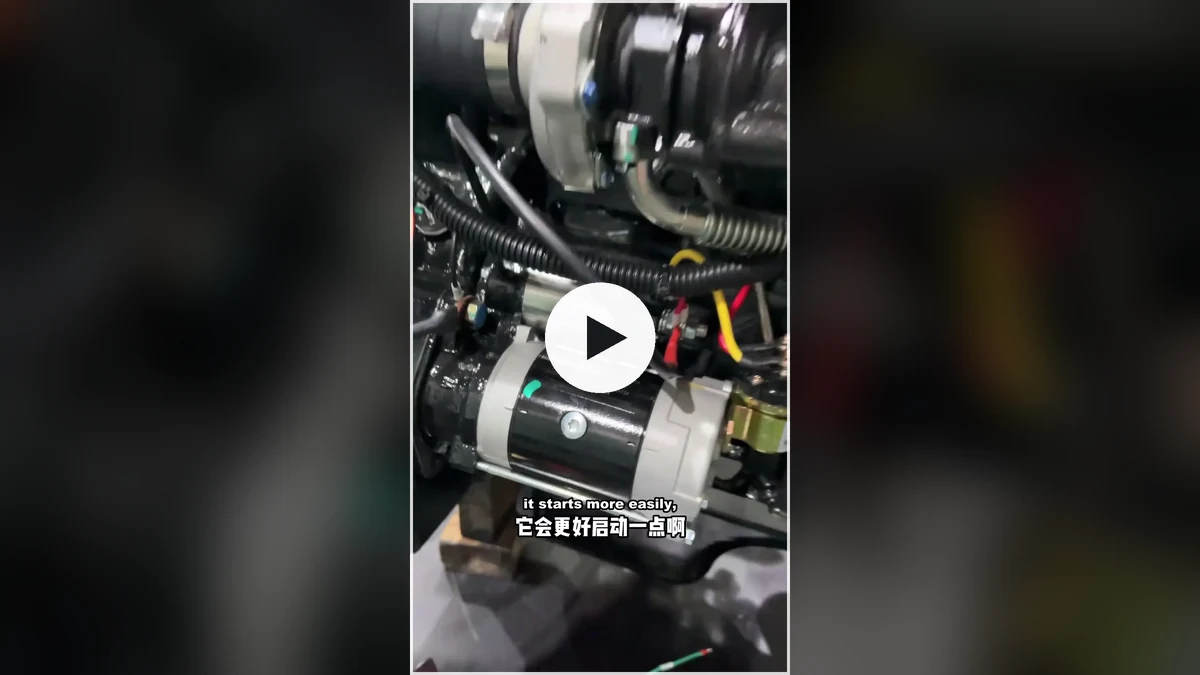
- Cold mornings. The starting aid fitted, the battery and the fuel grade the manual names for your lowest working temperature.
- Supply quality. Chargers are electronic loads, so ask for the voltage and frequency regulation the set holds under load.
Supply quality has a second half that belongs to the charger. Ask the charger maker whether the charger sets limits on the distortion or voltage swing of its supply, and pass that requirement to the generator supplier. The non-linear loads guide explains why electronic loads are sized differently from motors and heaters.
Refuelling deserves one line of its own in the operating plan. Decide where and when it happens relative to charging batteries and hot equipment, and follow the equipment instructions and the site rules for it. This guide does not describe that procedure.
The RFQ sheet and the acceptance run
Send every supplier the same sheet, and treat an offer as complete only when each line has an answer and a document behind it. The middle column describes a complete answer; the right column shows a reply that is not yet an answer.
| RFQ field | Complete answer | Send it back when it says |
|---|---|---|
| Chargers and simultaneous count (lines A and B) | The supplier restates the load it sized for | A set size with no load basis |
| Output | Voltage, phase, frequency and a socket schedule | "Standard sockets" |
| Rating basis | kW and kVA, rating category, the average load and hours that category allows, and power factor | One number with no category |
| Site rating | Prime or continuous rating at your altitude and temperature, with the maker's derating basis (line G) | "Suitable for high altitude" |
| Alternator and regulation | Alternator data sheet; voltage and frequency regulation under load | "Stable power" |
| Fuel and tank | Fuel type, tank volume and consumption with its load basis | A run time with no load stated |
| Controller and start | Readings shown, start method, remote start if you need it | No controller or start data |
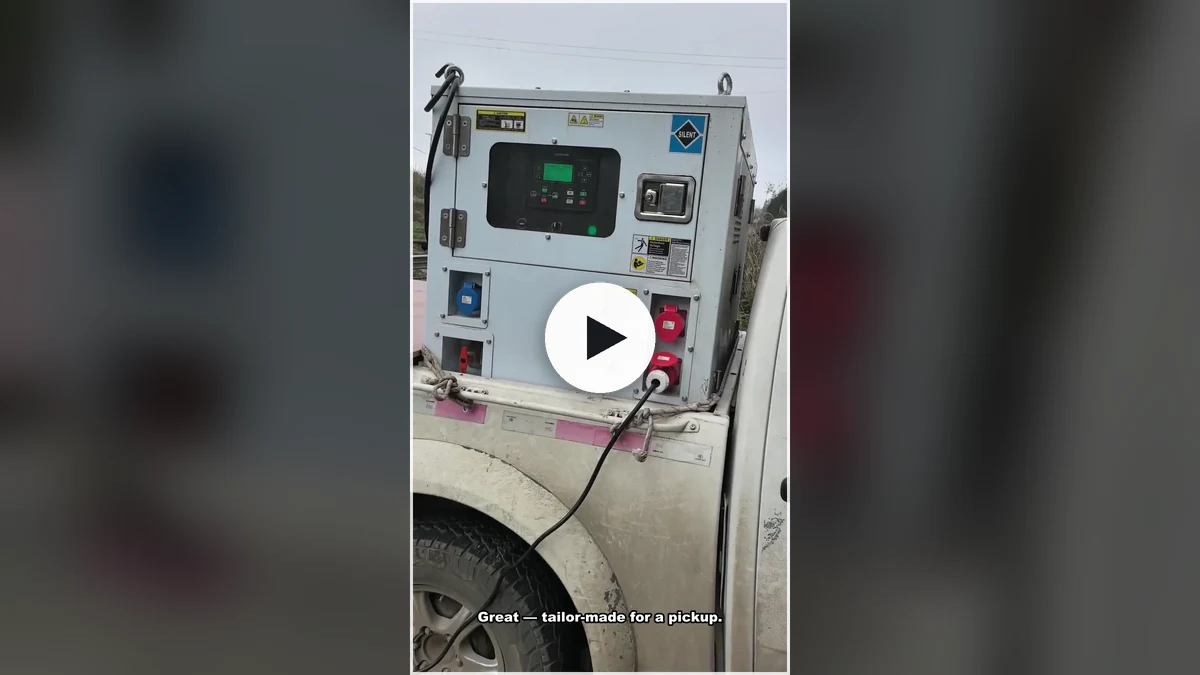
| Dust and rain | Build (open frame, roof or canopy) and the stated protection of the alternator and control box | "Weatherproof" |
| Documents | Data sheet, manual, service schedule and the test record for the unit | A brochure only |
Agree the acceptance check before the order. It is a witnessed run with your own chargers, in the combination you intend to use and with all of them switched on together, with the controller readings recorded. An unloaded start proves that the engine runs; it proves nothing about the chargers. For an export order the chargers are usually at the destination, so pair the factory test record with a charger run on delivery.
To request a quotation from BEAR, send the load sheet (lines A to F), the destination market and voltage, the site altitude and hottest working temperature, the build you need (open frame or canopy) and the quantity through the inquiry page. The written quotation confirms the model, configuration, accessories and documents, and a sample unit or a factory visit can be arranged before a production order. The current range is on the diesel generator page, with silent canopy sets listed separately.
Questions buyers ask
Can the same generator run the chargers and a transfer pump? Yes, if the pump is on the sheet. Add it as line D with its own nameplate data. An electric motor draws a short starting current well above its running current, which the motor starting guide explains, so tell the supplier whether the pump can start while the chargers are running.
Is a much larger generator the safe choice? Not automatically. A larger set costs more to buy, carry and fuel. Diesel engine makers commonly state a minimum load for long running, so ask for that figure before you buy a set that will spend most of the day far below its rating.
What changes when the team adds a second drone mid-season? Lines B, C and F change, and line H with them for the set you own. Check the new figure against that set's rating before the second drone starts work, while there is still time to plan a second set or a larger one. The sheet makes that check a matter of minutes.