

Write the canopy part of a silent genset RFQ: panel steel, coating, hardware, acoustic lining, vents and silencer, each with its proof and a first-unit check.
In this guide9 sections
"Silent" on a genset quotation tells you the set comes inside an acoustic canopy. It does not tell you what the panels are made of, how the steel is protected, what holds the doors shut in the rain, what sits behind the perforated sheet, or how loud the set will be. Specify the canopy as a construction schedule instead: shell, coating, exposed hardware, acoustic lining, airflow openings and the silencer inside the enclosure, with every field tied to the canopy drawing revision and to a document or a check on the first unit. Ask for noise separately, as a measured figure with its quantity, distance, load and method. The one case a canopy schedule cannot settle is a site with a noise limit: that needs a noise report for the exact configuration and an assessment of the site itself.
This guide is for importers, distributors, rental fleets and EPC contractors who buy enclosed diesel generator sets from a factory and need a canopy specification they can compare across quotations and inspect on delivery. It assumes the enclosed build has already been chosen; if it has not, start with the open-frame versus enclosed comparison. Home soundproofing projects, enclosure rankings, site noise regulation and the exhaust run beyond the canopy outlet are outside its scope.
Fix the canopy identity before comparing construction
Two canopies sold as "silent" can share nothing but the word, so the first lines of the canopy RFQ identify which canopy is being quoted. Every later field refers back to them, and a drawing revised after the quotation can change a door, a panel or the lining without any change to the product name.
- Genset model and configuration code that the canopy belongs to
- Canopy drawing number, revision and date
- The canopy's document list: hardware schedule, coating specification, lining data sheet, silencer document
- Colour code, and the artwork for any logo or decal if the canopy will carry your brand (artwork approval is covered in the private-label guide)
Keep "silent", "super silent" or "soundproof" in the RFQ only as a description of the build type. A supplier that can answer with nothing more than "standard silent canopy" has not yet given a specification, and comparing prices at that point compares two unknowns: the cheaper offer may simply contain less.
Panel steel and structure: what the supplier states, and where
Steel grade and thickness are values the supplier declares; they cannot be read from a photograph, and one canopy may use different sheet for the roof, the side panels, the doors and the internal frame. Ask for the values per panel group and tied to the drawing, not one thickness for "the canopy".
| Item | Complete answer | Answer to send back |
|---|---|---|
| Panels: roof, sides, doors, end panels | Material designation and thickness for each group, on the drawing or a material list | "Steel sheet", or one thickness with no location |
| Internal frame and stiffeners | Arrangement shown on the drawing; whether the canopy frame is separate from the base frame | "Reinforced structure" with no drawing |
| Joints and removable panels | Welded, bolted or riveted, by area; how removable panels are fixed | Not stated |
| Material record | Mill certificate, purchase record or drawing note, where the factory issues one | Nothing offered and nothing referenced |
| Lifting provision | Position shown on the drawing; any rating taken only from the design documents | A capacity inferred from how the lugs look |
The lifting provision is a record field, not a lifting instruction. Its rating comes from the supplier's design documents, and the lift plan on site belongs to whoever is responsible for the lift. The base frame and any base fuel tank are a separate specification with their own fields; the canopy schedule only records where the canopy meets them.
On the first unit, the inspector compares the visible structure, joints and accessible panel edges with the agreed drawing and records anything that could not be reached. A value that cannot be confirmed on the unit stays a document check, and the inspection record should say so rather than leave the field blank.
Coating: electrostatic powder coat or wet paint, and what proof to ask for
The process name is not the specification. A canopy described as "powder-coated" and one described as "painted" can only be compared once each supplier names the coating system: surface preparation, coating type and product, number of coats, colour code, the specified dry film thickness with its measurement method, and the test reports that cover that system on that substrate. Electrostatic powder coating and dip or spray wet paint are different processes, and the difference only helps a buyer through what the supplier can document about the system it applies.
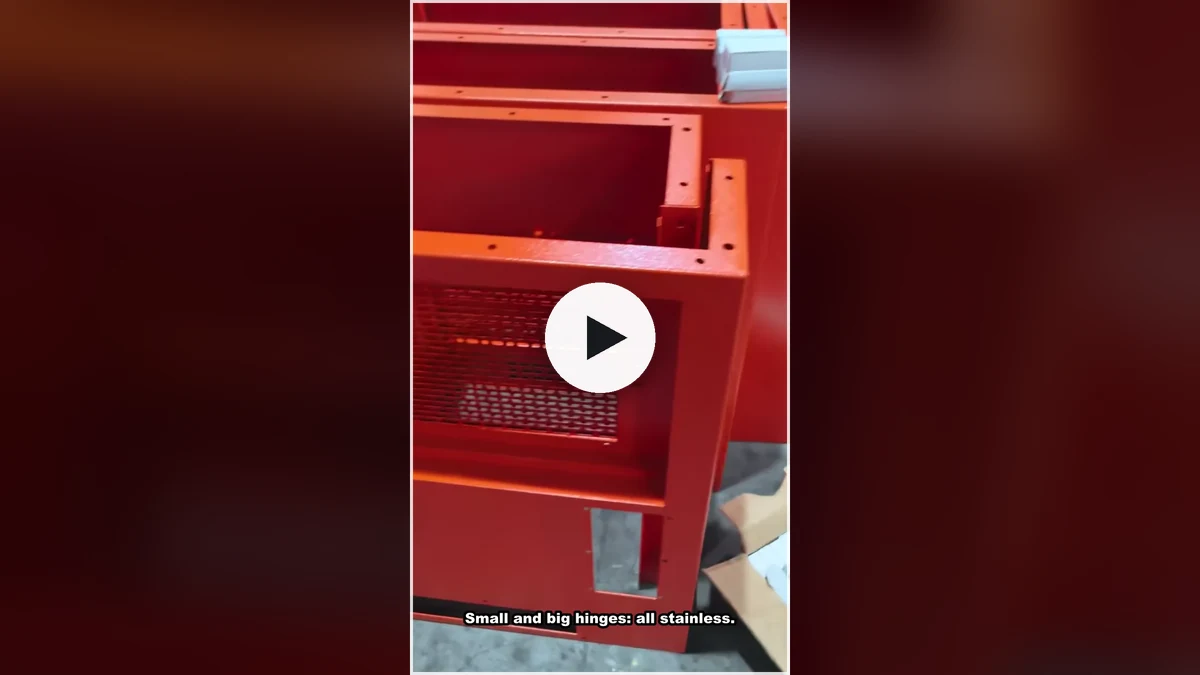
In the factory video further down this page, Sange says the canopy and base frame of silent sets are electrostatic-coated because the sets work outdoors in the rain. That is his description of the build he is showing, not a test result; the system description and the reports are still the evidence.
| Evidence | What it tells you | What it does not tell you |
|---|---|---|
| Film thickness record by a stated method, such as the magnetic method in ISO 2178 for non-magnetic coatings on steel | Thickness at the recorded locations | Adhesion or corrosion behaviour |
| Cross-cut result to ISO 2409 | Resistance of the tested coating to separation from the substrate | An adhesion value; the standard itself says the cross-cut is not an adhesion measurement |
| Pull-off result to ISO 4624 | Adhesion of the tested coating system | The condition of every other canopy surface |
| Salt-spray result to ISO 9227 | Whether the protected specimen kept its quality in a defined artificial atmosphere | A ranking of materials or a service-life prediction outdoors; the standard rules out both uses |
| Exposure class from ISO 12944-2 and system guidance from ISO 12944-5 | A shared vocabulary for the environment and the type of paint system suited to it | Proof that a particular canopy was coated as specified |
The ISO 12944 parts were written for protective paint systems on steel structures; they are useful here as a common language, not as a certificate. In practice, state the exposure the canopy will face (coastal, industrial, cold climate, de-icing salt on roads) and let the supplier propose a system for it with its evidence. A thickness, a cross-cut class or a number of salt-spray hours belongs in the RFQ only as a value you and the supplier agree for this contract, together with the specimen and method. None of them is a universal figure for generator canopies.
Hinges, fasteners, locks and the emergency-stop opening
Exposed hardware is the part of an outdoor canopy that rain and road dirt reach directly, and it is easy to specify item by item. The RFQ asks for a hardware schedule that lists each item (door hinges, latches and locks, panel and door screws, door stays, the emergency-stop surround) with its material or finish and its location on the drawing. "Stainless" and "zinc-plated" are different specifications; "stainless" without a grade is incomplete, and a plating needs its type named. Whether a material suits a coastal or road-salt site depends on the supplier's evidence and on your exposure, not on the word in the quotation.
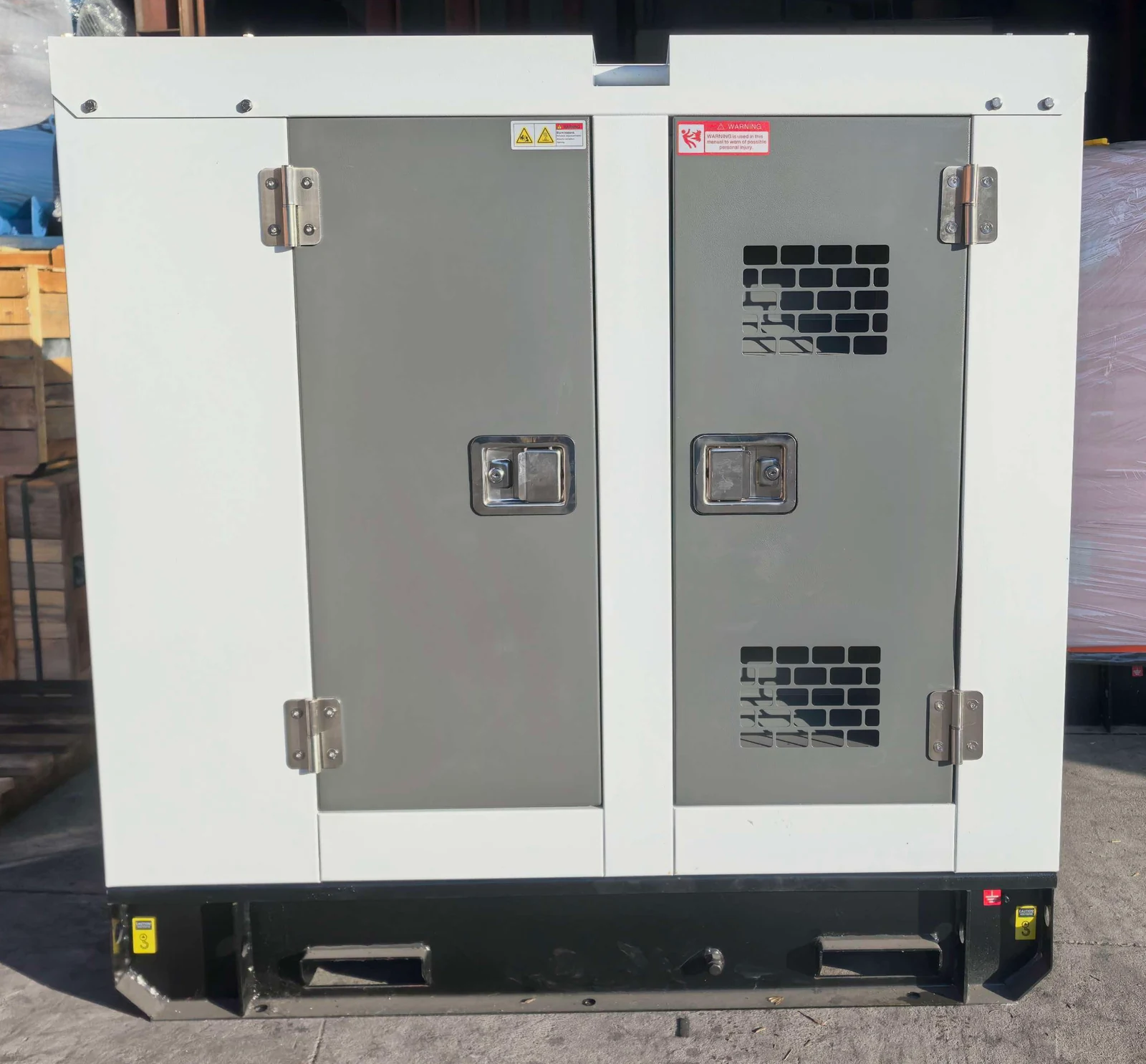
Door seals belong on the same schedule: the seal material, where it runs around each opening, and how the doors are held open during service. On the first unit, compare the delivered hinges, latches and seals with the schedule and photograph a representative example of each at a labelled location.
The emergency-stop control needs a line of its own. The RFQ states where the control sits and how it is reached with the canopy doors closed, and the first-unit inspection confirms that the delivered canopy matches the drawing. How the control is used, and any local rule about its position, belong to the equipment documentation and to the engineer responsible for the site; the canopy schedule only fixes the opening and its hardware.
Acoustic lining: material, facing, fixing and access
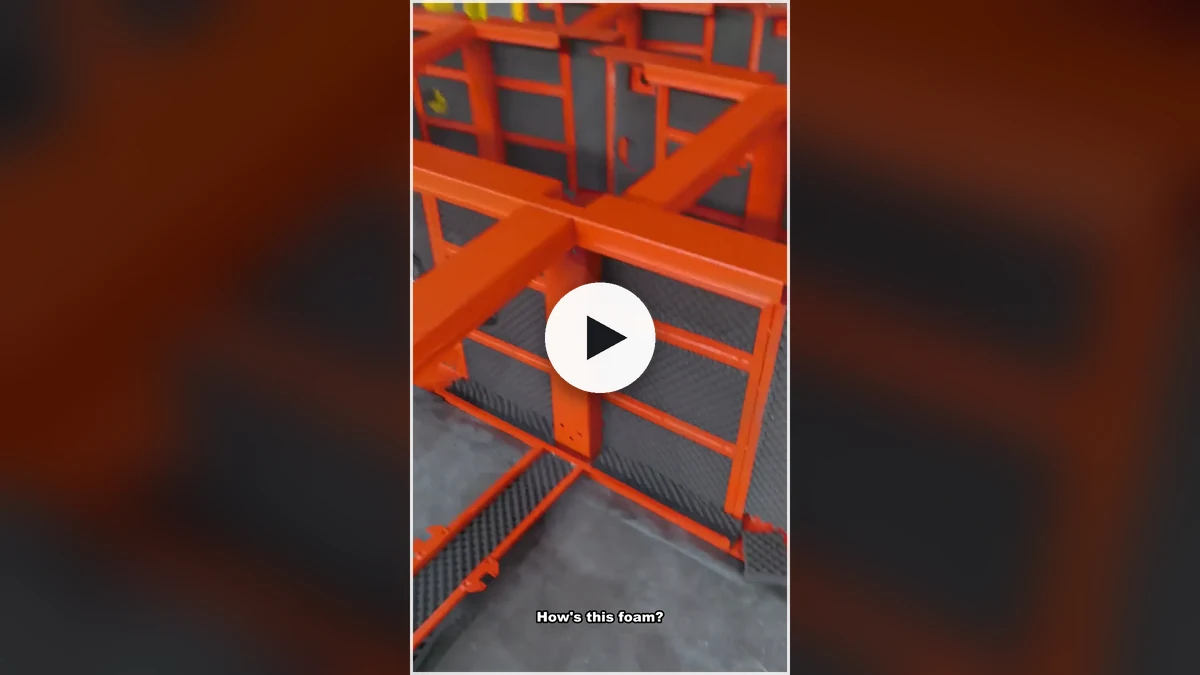
A lining described as "soundproofing inside" is not an answer. The schedule names the lining layer by layer: the material and its form (profiled foam, flat foam, mineral wool or another product), the declared density and thickness from the lining maker, what faces it (perforated sheet, mesh or a film), how it is fixed (adhesive, pins, a retaining mesh or a frame), which surfaces it covers (doors, side panels, roof, inlet and outlet baffles) and how it can be inspected through the service doors.
Profiled and flat foam, or foam and mineral wool, are different products, and the form alone says nothing about the acoustic result. What the buyer can compare between two quotations is whether both name a material, a thickness, a facing and a fixing for the same surfaces. A quotation that names all four for the doors but says nothing about the roof has left a gap, not a lighter specification.
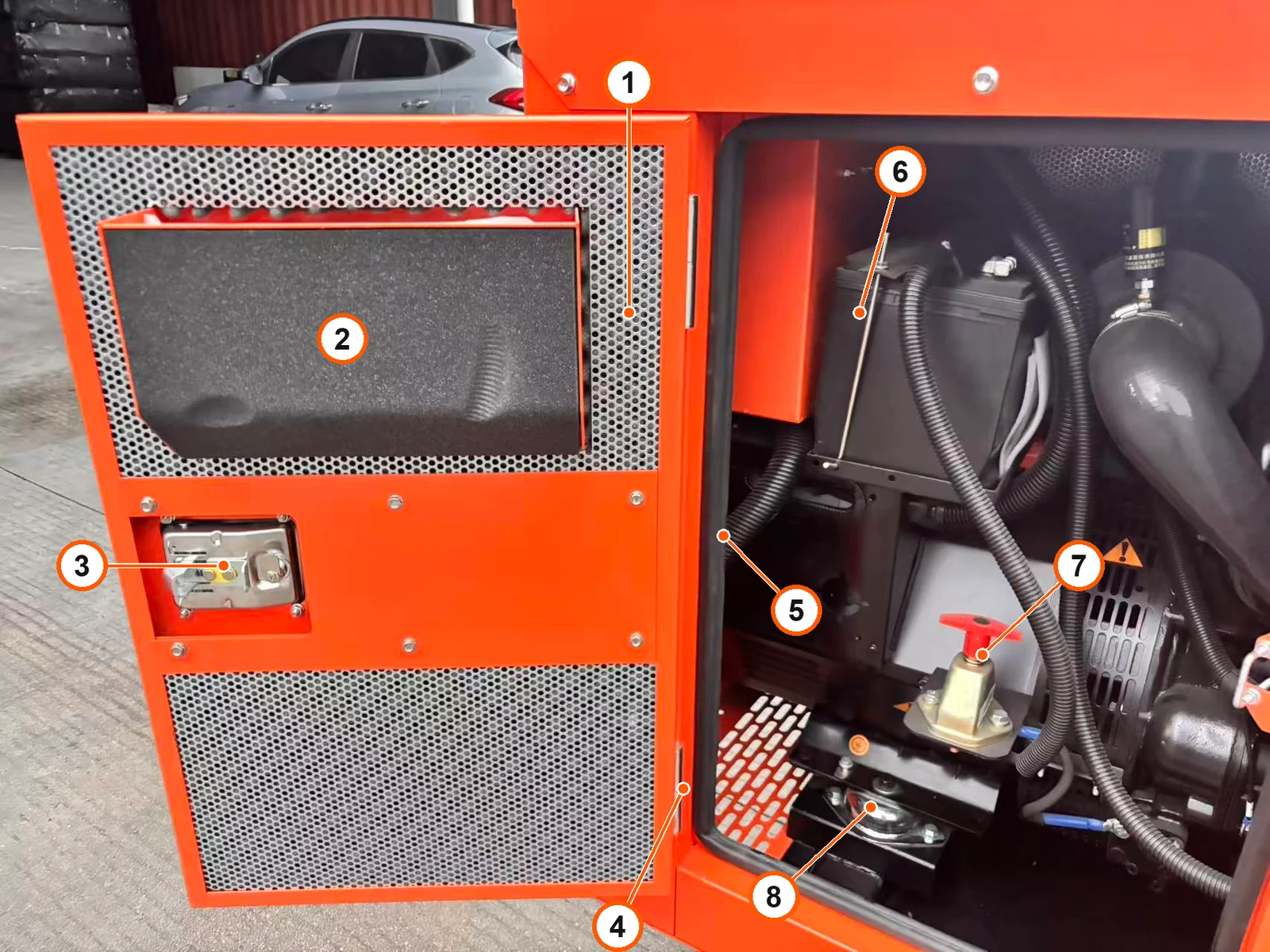
| No. | What the photograph shows | Field it belongs to |
|---|---|---|
| 1 | Perforated sheet facing on the inside of the door | Lining facing |
| 2 | Foam-lined baffle on the inner face of the door | Lining material and location |
| 3 | Compression latch with lock | Hardware schedule |
| 4 | Lower door hinge | Hardware schedule |
| 5 | Rubber seal around the door opening | Doors and seals |
| 6 | Battery hold-down rod | Service access inside the canopy |
| 7 | Battery isolator switch | Service access inside the canopy |
| 8 | Anti-vibration mount at the base | Interface with the base frame (base-frame specification) |
The lining sits close to a hot engine and to fuel and oil vapour, so the schedule also needs the lining maker's data sheet for the exact material, covering its fire behaviour and its resistance to oil and fuel for this use. Check that the product named on the data sheet is the product fitted. Fire classifications written for building products, such as EN 13501-1, describe construction products in their end use; they do not apply automatically to a lining inside a genset canopy, so the requirement of the target market and the lining maker decide which document is relevant.
Vents, doors and the silencer inside the canopy
Airflow openings are construction features, and the schedule records them as such: inlet and outlet positions, the louvre or cut-out pattern, any acoustic baffle behind the openings, and the rain protection fitted (hoods, louvres, a rain cap on the exhaust outlet). Whether the openings are large enough cannot be judged from a photograph; it depends on the cooling and combustion-air requirements of the engine and radiator in that model, which the supplier states for the configuration. If the set will run inside a building or a container, the room ventilation is a separate design task for the site.
Vents, seals and rain hoods also do not establish an IP rating. An IP code describes the degree of protection of an enclosure tested under IEC 60529; if the project needs one for the canopy, it is a separate claim with its own evidence, and the IP code of the alternator is not a rating of the canopy.
For the silencer fitted inside the canopy, record the type and the grade that the supplier states, its location and the component document. In the factory video above, Sange calls the silencer he uses on silent sets "three-core"; that describes his part, not a grade, and the supplier's own document should state the grade. Everything beyond the canopy outlet (piping, flexible connection, the discharge point) belongs to the exhaust specification and to the site design, not to the canopy schedule.
Keep the noise figure apart from the canopy schedule
A noise figure is a separate claim and needs its own fields. Without them, two figures from two suppliers cannot be compared, and neither can be checked against a site limit.
- Quantity: sound pressure level at stated positions and distance, or sound power level
- Value and frequency weighting
- Load or operating condition during the measurement
- Method or test code, with its edition
- Tested configuration, including the canopy drawing revision
- Laboratory or test record that issued the figure
ISO 8528-10 is the noise test code for reciprocating-engine generating sets; it covers sound power and the emission sound pressure at the workstation. Sound power is a property of the source determined by a method, not a reading at a distance the buyer picks. General sound-power methods such as ISO 3746, a survey method, and ISO 3744, an engineering method, have different stated scopes, so figures from different methods are not interchangeable without checking the method and its uncertainty. In the EU, Directive 2000/14/EC on noise emission by outdoor equipment includes power generators within its scope and deals with noise measurement and sound-power labelling; whether it applies, and how, depends on the exact product and the market, so it is not a global rule.
The canopy schedule does not replace any of these fields. The noise claim check for portable sets applies the same logic to smaller units, and the test report red flags guide covers reports that do not belong to the unit they describe.
The canopy RFQ and first-unit inspection sheet
The sheet below turns the sections above into one table that can go out with the RFQ and come back as the first-unit inspection record. A field is complete when it carries a value or an agreed "not applicable", the evidence names the same genset model and canopy drawing revision, and nothing in it contradicts another document.
| No. | Field | Complete supplier answer | Evidence and who confirms | First-unit check: closed when |
|---|---|---|---|---|
| 1 | Canopy identity | Genset model, configuration, canopy drawing number and revision | Drawing and document list from the genset supplier | Canopy identification and documents match the order |
| 2 | Panels and structure | Material and thickness per panel group, frame arrangement, joints | Drawing or material list; material record where issued | Visible structure matches the drawing; unreachable items listed |
| 3 | Coating system | Pretreatment, coating type and product, coats, colour code, film thickness and method | Coating specification; test reports naming the system and specimen; coating supplier for product data | Coverage, colour and visible defects inspected; thickness readings at agreed points match |
| 4 | Hardware schedule | Each hinge, latch, lock, screw and stay with material or finish and location | Schedule from the genset supplier; component supplier declarations | Representative items photographed and agree with the schedule |
| 5 | Doors and seals | Door arrangement, seal material and route, door stays | Drawing and parts list | Door count, fit and seal continuity agree with the drawing |
| 6 | Acoustic lining | Material and form, declared density and thickness, facing, fixing, surfaces covered | Lining maker's data sheet; genset supplier for the fitted arrangement | Lining, facing and fixing photographed on each listed surface |
| 7 | Lining fire and oil data | The property claimed, with method and specimen | Lining maker or laboratory document for that material | Product on the document is the product fitted |
| 8 | Vents and rain protection | Inlet and outlet positions, pattern, baffles, rain features | Drawing; supplier's airflow statement for the model; site designer for site interfaces | Each feature present as drawn |
| 9 | Silencer inside the canopy | Type, stated grade, location | Component document; genset supplier | Silencer identified in position where accessible |
| 10 | Emergency-stop opening | Position and access with doors closed | Drawing; equipment documentation | Opening and hardware match the drawing |
| 11 | Lifting provision | Position on the drawing; rating from design documents only | Supplier design documents | Provision present as drawn; no rating accepted without a document |
| 12 | Noise claim, if any | Quantity, value, weighting, distance, load, method, tested configuration | Test report from the supplier or laboratory | Report matches the configuration and drawing revision |
| 13 | Photo record | Agreed shot list for fields 1 to 11 | Inspector or supplier, as agreed | Every shot taken at a labelled location; deviations listed with an owner |
When a field comes back incomplete, return it by number with the missing item named, rather than sending the whole sheet again.
Hypothetical example. Supplier answer to field 6: "High-density soundproofing foam inside the canopy." Returned as: "Field 6 is incomplete. Please state the lining material and form, the declared density and thickness, the facing and the fixing method, and the surfaces it covers, for canopy drawing [number], revision [letter], and attach the lining maker's data sheet."
Treat the first delivered canopy as the reference unit for the rest of the order: the first-article approval guide explains how to freeze that reference, and the pre-shipment inspection checklist covers the checks that follow for later units.
Sending a canopy specification to BEAR
For a BEAR quotation, send the sheet, even partly filled, with the output and electrical configuration you need, the destination market and the exposure the canopy will face, through the contact page; Miya handles the enquiry. Enclosed models currently listed are in the silent diesel generator range. The written quotation confirms the model, configuration, accessories and documents, so each canopy field can be tied to one build. A sample unit, or a visit to the factory, can be arranged before a production order if you want to check the canopy construction yourself.